


Torino è una città che non ti avvisa, non ti fa nemmeno un cenno educato di cortesia prima di catturarti in una trappola meteorologica di cui non sospettavi l’esistenza. Come quando esci in una giornata che pensavi fosse solo un po' uggiosa, con un giacchetto leggero e convinta che l’ombrello sia un oggetto obsoleto del passato, tipo i floppy disk o i libri sui dinosauri con i nomi sbagliati.
E poi, bam!
Eccoti lì, assediata da un diluvio sotto una tettoia liberty che sembra ironicamente più fragile di te.
Tenti di darti un'aria composta, guardi la pioggia, la città scorrere, mentre tu, immobile, diventi una comparsa in una scena che non sapevi di star girando.
È proprio lì, sotto il cielo grigio Torino, con la Mole che ti guarda come un vecchio parente saggio e affettuoso, che incontro Margherita.
Non è uno di quegli incontri casuali da film indie, dove ci si scambia un “ciao” svogliato e ci si perde nella folla senza neanche accorgersene, incontrare Margherita è come essere trascinati in un universo parallelo, uno di quelli che, nonostante tutte le stranezze, sembra più reale del tuo.
E se nel tuo universo parallelo c'è una donna dai capi colorati, con tatuaggi che raccontano storie e una passione per il cibo che sembra scorrere nelle sue vene al posto del sangue – beh, allora hai appena conosciuto Margherita.
Margherita si definisce "divulgatrice enogastronomica", ma per me suona un po’ troppo professionale, freddo, privo di quella magia che invece permea tutto ciò che fa.
No, Margherita ha un dono, una dote naturale: “Trovo i posti più strani, i più curiosi, e lo faccio come una missione,", il suo sorriso diventa una specie di firma invisibile, la prova tangibile che lei è esattamente quello che sembra: una guida per chiunque voglia perdersi nelle stradine di una città. "È come se fossi nata con una bussola interna che mi guida nei meandri delle città e mi fa trovare il luogo ideale in cui bere e mangiare.”
Sorride.
Sorride con gli occhi.
Il suo viso ispira fiducia.
Mi racconta come questo suo dono di orientarsi tra tavole apparecchiate sia nato molto prima di scoprire e iniziare a usare Instagram nel 2010.
Il suo amore per il cibo è una questione di famiglia, affonda le radici nelle cucine di suo padre e sua nonna. "Mio padre cucinava, e io ero lì, una bambina affamata non tanto di cibo, quanto di esperienze, di sensazioni. Impastavo, annusavo, guardavo e memorizzavo ogni cosa come se fosse la chiave per capire il mondo." La torta verde della nonna, un’antica ricetta di famiglia, era un rituale, una connessione con qualcosa di più grande, di più profondo.
C’è un lampo nei suoi occhi quando parla di quei momenti, una scintilla di nostalgia, ma anche una calma consapevolezza. "Il cibo è il mio linguaggio d’amore, se vedo che sei triste, ti preparo qualcosa da mangiare." E la cosa impressionante è che lei sa sempre cosa ti piace, perché si è preoccupata davvero di capire chi sei. "Mi piace prendermi cura di chi amo, anche attraverso la coccola di un piatto appena sfornato”, come dire: non ti do solo da mangiare, ti do un pezzo di me stessa.
Poi si siede più comoda, e parliamo dei suoi luoghi del cuore.
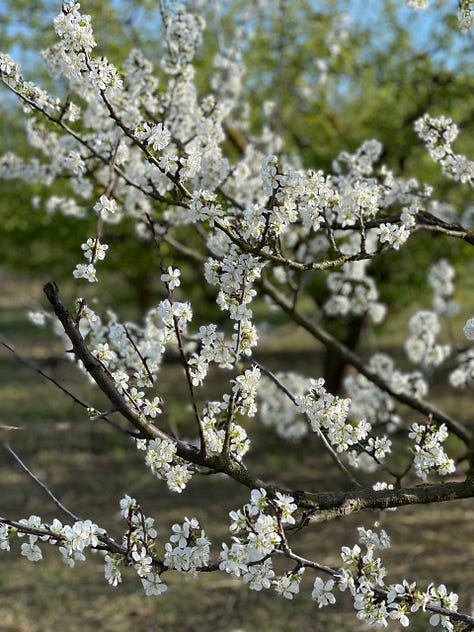
"Allora, ecco i miei posti del cuore," dice come qualcuno che sta per rivelarti una password, non quella del Wi-Fi ma quella delle radici, di quei luoghi che porti con te come amuleti. “Innanzitutto, Pecetto Torinese. Non è solo perché ci sono nata, anche se sì, è anche per quello, ma soprattutto è per le ciliegie. Lo so che suona assurdo, ma fidati, è una cosa antica, quasi rituale. Perché a Pecetto le ciliegie non sono solo ciliegie; sono… come dirti? Un’identità. Vai ovunque, in ogni altra parte del mondo, e lì le ciliegie sono solo frutti rossi con i piccioli. Ma a Pecetto sono amuleti. È la collina, il sole che non brucia ma scalda, quella calma che si posa su di te come una coperta spessa in una giornata ventosa. È come stare dentro un quadro rurale che, a ogni stagione, ti si dipinge intorno.”
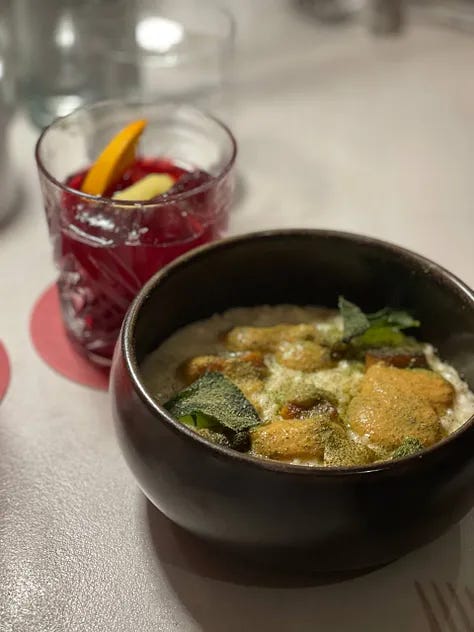
“Poi c’è il G.A.F. a Cambiano. Lì trovi Guido. Guido Fejles, lui è quel luogo.
Ha questo ristorante ricavato dalla segheria del nonno, un posto con un’allure quasi da Brooklyn post-industriale.
Guido, con quel suo modo da Oste con la O maiuscola, ti fa sentire come se ogni storia che ti racconta ti appartenesse un po’. E poi la sera, quando entrano in scena Nicolò e Paolo a prepararti un cocktail, è lì che capisci che la serata è appena iniziata. Una bistronomia, sì, alta cucina, ma priva di pesanti formalismi. Il tipo di posto dove puoi andarci con chi ami o solo con te stessa, e senti addosso un senso di libertà quasi insolito, difficile da spiegare a chi non ci è stato.”
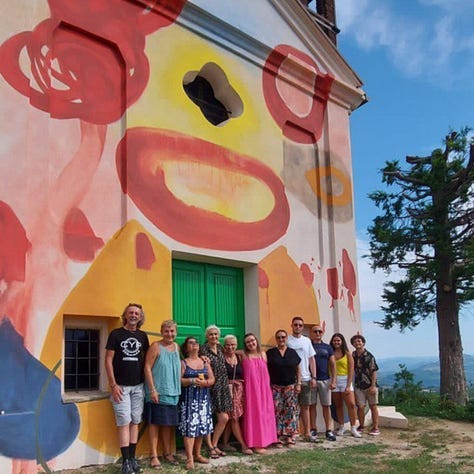
Mi giro per guardarla e colgo quell’energia che sembra quasi fuori misura, un po' come il sole del tramonto che sfugge alle nuvole. Prima che io possa interromperla con una domanda, lei continua, quasi leggendo la mia curiosità. “Montabone. Un altro posto del cuore che non è proprio Torino, è un paesino dell’Alta Langa Astigiana, dove il concetto di tempo si diluisce. Patrimonio UNESCO oggi, certo, ma per me è stato sempre e solo “casa”. La chiesa di San Rocco appena ridipinta per un progetto di Artissima, le cantine, quella panchina gigante dove ti siedi e ti senti piccolo piccolo, una formica in un universo di giganti. Ti ci porto, promesso.”
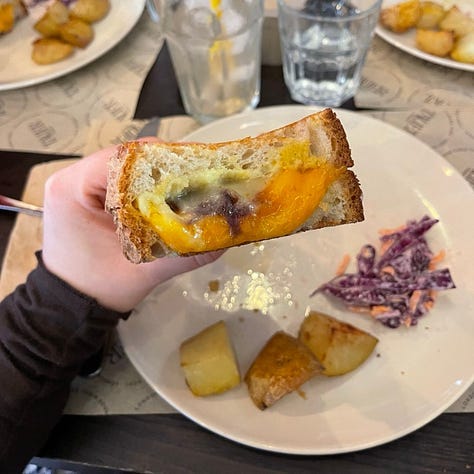
E c’è quel momento in cui ti chiedi se hai più fame per i piatti di cui parla o curiosità per i luoghi che tratteggia con queste parole che senti quasi di poter vedere, toccare. “Adesso torniamo a Torino, alla Tauer Bakery,” aggiunge. “Conosco Alessandra fin dall’inizio, sai? Ricordo quando hanno aperto in via Ormea. E adoro il loro brunch. Adoro come pensano a tutti, a ogni palato, senza distinzioni.”
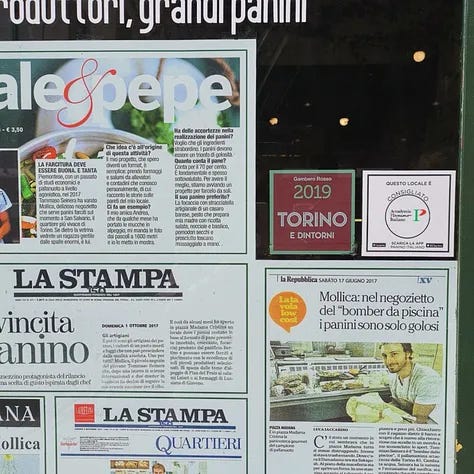
Mi parla poi di Mollica, con l’affetto di chi racconta di un vecchio amico. “Io ero compagna di università della fidanzata storica di Tommaso, e un giorno mi disse che il suo ragazzo stava aprendo un posto. Sette anni dopo, Mollica è un’istituzione, con due negozi e un’etica che traspare in tutto.”
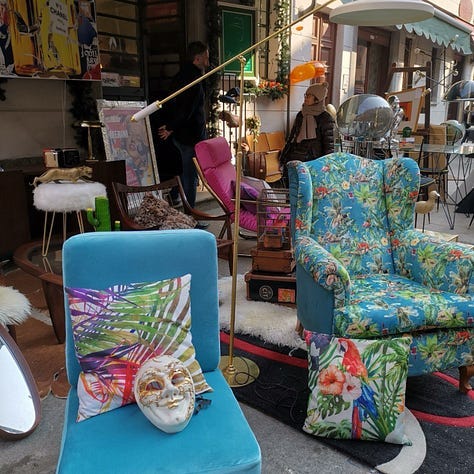
L’ultimo posto, dice, non è legato al cibo, ma al cuore pulsante della città: il Balon. “Lo storico mercato delle pulci di Torino, quello con una collezione di oggetti che va dal surreale al vintage. Io ci andavo da piccola con i miei genitori, e c’era questo ristorante marocchino dove servivano un tè alla menta di cui ancora ricordo il sapore. Mio papà aveva un negozio di abiti customizzati da lui e al Balon andavamo a scovare abiti come se fossero tele bianche che mi padre avrebbe trasformato in opere d’arte e poi le immancabili giacche militari, vera passione di mia madre.”
E per un attimo resta lì, sospesa, come se le nostre chiacchiere l’avessero portata in un’epoca diversa, in quei ricordi che le appartengono come un pezzo del suo essere. Sorride, e con quel sorriso mi invita in un luogo privato, in cui tutto è intrecciato, tutto si tocca, tutto ha un significato. E mentre la guardo, capisco che per lei quei posti non sono solo spazi geografici. Sono una mappa emotiva, fatta di persone, storie e frammenti di vita che abitano ancora dentro di lei.
MARGHERITA'S PLACES
PECETTO TORINESE
MONTABONE
🇬🇧 English version 🇬🇧
Margherita, ambassador of authentic taste in Turin
Turin is a city that doesn’t give you a heads-up; it doesn’t even offer a polite nod before trapping you in a weather ambush you didn’t see coming. It’s like those days when you head out, thinking it’s just a bit gloomy, with a light jacket on, convinced an umbrella is an outdated accessory, like floppy disks or books about dinosaurs with all the wrong names.
And then, bam!
There you are, under siege by a downpour beneath a Liberty-style canopy that seems, ironically, even more fragile than you. You try to keep your composure, watching the rain, the city flowing by, while you stand still, a silent extra in a scene you didn’t know you were filming.
It’s right there, under the gray sky of Turin, with the Mole gazing down at you like a wise, affectionate relative, that I meet Margherita. This isn’t one of those chance encounters from an indie film where you exchange a lazy “hi” and fade into the crowd without noticing; meeting Margherita feels like being pulled into a parallel universe, one that, despite all its quirks, feels more real than your own.
And if your parallel universe has a woman in colorful clothes, with tattoos that tell stories and a passion for food that seems to flow through her veins instead of blood, well, then you’ve just met Margherita.
Margherita calls herself a “gastronomic communicator,” but to me, that sounds a bit too professional, cold, lacking the magic that permeates everything she does. No, Margherita has a gift, a natural talent: “I find the strangest, most curious places, and I do it as a mission.” Her smile becomes a sort of invisible signature, the tangible proof that she is exactly what she seems: a guide for anyone looking to lose themselves in a city’s side streets. “It’s like I was born with an inner compass that leads me through cities, helping me find the perfect spot to eat or drink.”
She smiles. Smiles with her eyes. Her face inspires trust. She tells me how this gift of navigating set tables was born long before discovering and starting to use Instagram in 2010. Her love for food is a family affair, rooted in the kitchens of her father and grandmother. “My father cooked, and I was there, a hungry little girl, not for food but for experiences, for sensations. I kneaded, smelled, watched, and memorized everything as if it was the key to understanding the world.” Her grandmother’s green cake, an old family recipe, was a ritual, a connection to something greater, something deeper.
There’s a spark in her eyes when she talks about those moments, a glint of nostalgia but also a calm awareness. “Food is my love language. If I see you’re sad, I’ll cook something for you.” And the impressive thing is, she always knows what you like because she genuinely cares to understand who you are. “I love caring for those I love, even with the comfort of a freshly baked dish,” as if to say: I’m not just feeding you; I’m giving you a piece of myself.
Then she sits more comfortably, and we talk about her favorite places.
“So, here are my favorite places,” she says, as if revealing a password, not for Wi-Fi but for roots, for places that feel like amulets. “First of all, Pecetto Torinese. It’s not just because I was born there, though yes, it’s partly that, but mostly because of the cherries. I know it sounds absurd, but trust me, it’s an ancient, almost ritualistic thing. Because in Pecetto, cherries aren’t just cherries; they’re… how can I explain? An identity. Go anywhere else in the world, and cherries are just red fruits with stems. But in Pecetto, they’re charms. It’s the hill, the sun that warms rather than burns, that calm that wraps around you like a thick blanket on a windy day. It’s like being inside a rural painting that repaints itself around you every season.”
“Then there’s the G.A.F. in Cambiano. That’s where you’ll find Guido. Guido Fejles, he is that place. He has this restaurant made from his grandfather’s sawmill, with an almost Brooklyn-like post-industrial vibe. Guido, with his way of being a Host with a capital H, makes you feel like every story he tells somehow belongs to you. And then, in the evening, when Nicolò and Paolo come on the scene to make you a cocktail, that’s when you realize the night is just beginning. It’s a kind of bistronomy, high-end cuisine without heavy formalities. The kind of place you can go with someone you love or just by yourself and feel an unusual sense of freedom, hard to explain to those who haven’t been there.”
I turn to look at her and catch that energy that seems almost oversized, like the setting sun escaping the clouds. Before I can interrupt her with a question, she continues, as if reading my curiosity. “Montabone. Another favorite place that isn’t exactly Turin, it’s a village in the Alta Langa Astigiana, where time seems to dissolve. UNESCO heritage now, sure, but for me, it’s always been simply ‘home.’ The freshly repainted San Rocco church for an Artissima project, the cellars, that giant bench where you sit and feel so small, an ant in a world of giants. I’ll take you there, I promise.”
And there’s a moment when you wonder if you’re hungrier for the dishes she describes or more curious about the places she sketches with words that you almost feel you can see, touch. “Now, let’s go back to Turin, to Tauer Bakery” she adds “I’ve known Alessandra since the beginning, you know? I remember when they opened on Via Ormea. And I love their brunch. I love how they think of everyone, every palate, without distinction.”
She then talks about “Mollica”, with the affection of someone recounting an old friend. “I was a college mate of Tommaso’s longtime girlfriend, and one day she told me her boyfriend was opening a place. Seven years later, Mollica is an institution, with two shops and an ethos that shines through everything.”
The last place, she says, isn’t tied to food but to the city’s heartbeat: the Balon. “The historic flea market of Turin, with a collection of items ranging from surreal to vintage. I used to go there as a child with my parents, and there was this Moroccan restaurant where they served mint tea whose taste I still remember. My dad had a store with custom-designed clothes, and at the Balon, we would hunt for pieces like blank canvases that my father would turn into works of art. And then the military jackets, my mom’s true passion.”
For a moment, she’s there, suspended, as if our chat has taken her back to a different time, to memories that belong to her as part of her very being. She smiles, and with that smile, she invites me into a private place where everything is intertwined, where everything touches, where everything has meaning. And as I watch her, I realize that for her, these places aren’t just geographical spots. They’re an emotional map, made of people, stories, and fragments of life that still live within her.